.png)
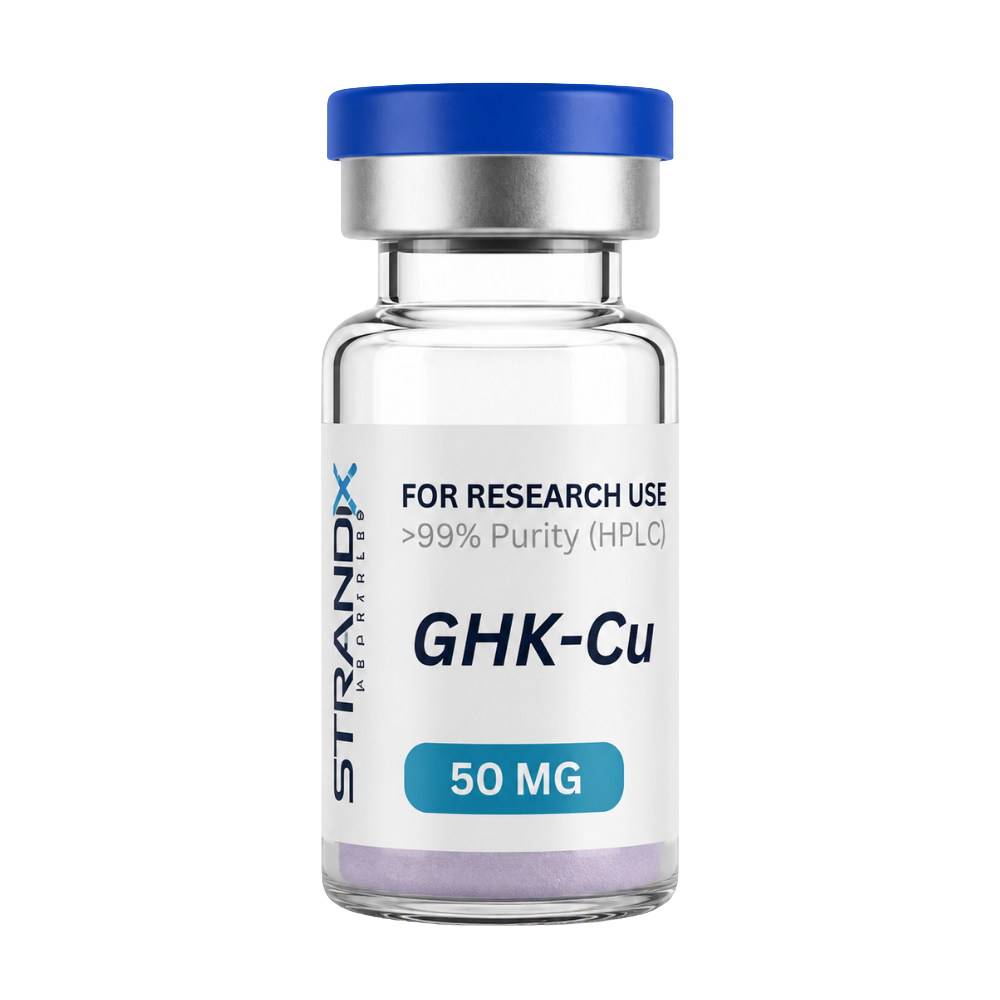
GHK-Cu
$58.99
In stockGHK-Cu, commonly called copper peptide, is a complex formed when the three-amino-acid peptide glycyl-L-histidyl-L-lysine binds copper. GHK was originally isolated from human plasma, and its copper-bound form has been studied for its effects on connective-tissue production and remodeling.
| SKU | RC-ST-GHKCU-50MG |
|---|---|
| Manufacturer | Strandix Peptides |
| Form | Lyophilized Vial |
| Strength | 50 mg |
| Size | 3 mL Vial |
| Reported Result | >99% |
| Stock | In stock |
| Documentation Status | Pending Final COA |
Product Description
GHK-Cu, commonly called copper peptide, is a complex formed when the three-amino-acid peptide glycyl-L-histidyl-L-lysine binds copper. GHK was originally isolated from human plasma, and its copper-bound form has been studied for its effects on connective-tissue production and remodeling.
Interest in injectable GHK-Cu comes primarily from laboratory and animal research examining collagen production, cellular signaling, and wound-repair processes. These findings provide a biological rationale for further investigation, but they do not establish benefits from injections in people.
What research has shown:
Increased collagen synthesis in cells: Laboratory experiments found that GHK-Cu stimulated collagen production in cultured fibroblasts—the cells responsible for producing much of the structural framework of connective tissue.
Effects on connective-tissue remodeling: Cell studies found that GHK-Cu influenced enzymes and their inhibitors involved in breaking down and renewing the extracellular matrix. These findings suggest activity in tissue remodeling rather than simply increasing collagen production.
Increased repair-tissue accumulation in animal wounds: In a rat study, GHK-Cu injected directly into implanted wound chambers increased collagen and other extracellular-matrix components. This experimental model does not establish that routine subcutaneous injections produce equivalent effects in humans.
Changes in repair-related cell signaling: Laboratory research using normal and radiation-exposed fibroblasts reported increased cell growth and changes in growth factors associated with tissue repair. These remain preclinical observations.
Storage and handling: Keep sealed, dry, and protected from heat and direct light unless the final product label or COA states otherwise. Maintain the product with its matching batch record.
Third-party testing status.
| Batch / Lot | Reported Result | Tested | Partner | Status | Document |
|---|---|---|---|---|---|
| RC-PEP-GHKCU-0526 | Supplier spec pending verification | Pending | Pending | Pending Final COA | Pending Final COA |