.png)
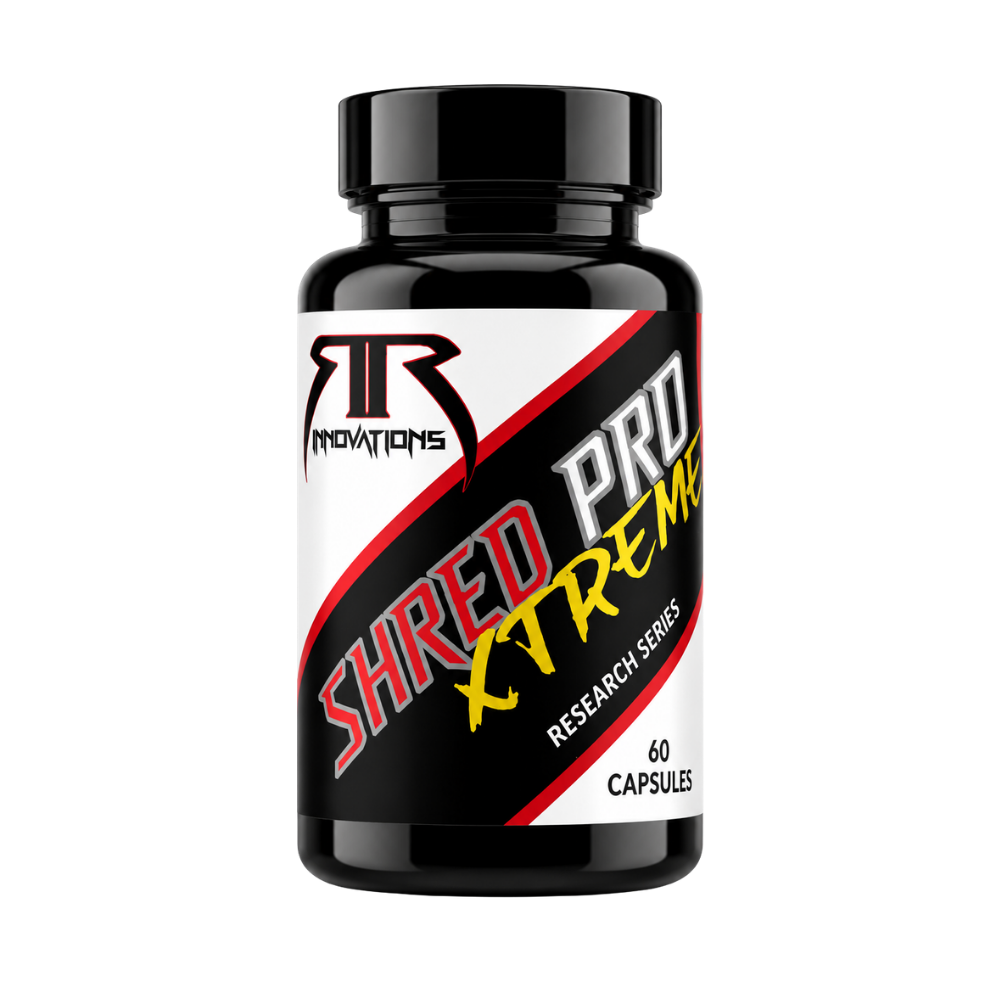
Shred Pro Extreme
$99.99
In stockShred Pro Xtreme is a six-compound research formulation featuring SR-9009, GW-1516, MK-2866, MK-677, 5α-Hydroxy Laxogenin, and Noopept.
| SKU | RC-RR-SHREDX-60CT |
|---|---|
| Manufacturer | R+R Innovations |
| Form | Capsule |
| Strength | 10 mg (SR-9009), 15 mg (GW-1516), 15 mg (MK-2866), 15 mg (MK-677), 100 mg (5aHydroxy Laxogenin), 2.5 mg (NOOPEPT) |
| Size | 60 ct |
| Reported Result | Supplier spec pending verification |
| Stock | In stock |
| Documentation Status | Pending Final COA |
Product Description
Shred Pro Xtreme is a concentrated, multi-pathway research formulation combining six compounds with distinct molecular targets and research histories. The blend contains 10 mg of SR-9009, 15 mg of GW-1516, 15 mg of MK-2866, 15 mg of MK-677, 100 mg of 5α-Hydroxy Laxogenin, and 2.5 mg of Noopept.
Although products of this type are sometimes broadly categorized as “SARM blends,” only MK-2866 is conventionally classified as a selective androgen receptor modulator. SR-9009 is associated with REV-ERB signaling, GW-1516 is a PPARδ agonist, MK-677 is a ghrelin-receptor agonist and growth-hormone secretagogue, 5α-Hydroxy Laxogenin is a synthetic steroidal compound with incompletely characterized pharmacology, and Noopept is a peptide-derived research compound.
SR-9009 — 10 mg
SR-9009 is an investigational synthetic ligand originally characterized as an agonist of the nuclear receptors REV-ERBα and REV-ERBβ. REV-ERB receptors are components of the molecular circadian clock and participate in the transcriptional regulation of metabolic, inflammatory, and behavioral rhythms.
Unlike cell-surface receptors, REV-ERBs function as nuclear transcription factors. Ligand-dependent changes in their activity can alter the expression patterns of genes associated with circadian timing and cellular metabolism. Early experiments involving SR-9009 reported changes in metabolic and circadian pathways in cells and animals.
Later research has shown that some cellular effects attributed to SR-9009 can occur in the absence of functional REV-ERBα and REV-ERBβ. This suggests that SR-9009 may possess off-target or REV-ERB-independent activity. Its precise mechanism therefore remains an active subject of research rather than a fully settled pharmacological conclusion. Published controlled human pharmacokinetic and safety data are extremely limited.
GW-1516 — 15 mg
GW-1516—also known as GW501516, Cardarine, or GSK-516—is a synthetic agonist of peroxisome proliferator-activated receptor delta, or PPARδ. It is not a SARM and does not principally act through the androgen receptor.
PPARδ is a ligand-activated nuclear receptor involved in regulating the transcription of genes associated with lipid handling, glucose metabolism, inflammation, mitochondrial biology, and cellular energy use. After ligand binding, PPARδ forms a transcriptional complex with the retinoid X receptor. This complex can interact with specific DNA-response elements and influence the expression of PPAR-responsive genes.
GW501516 entered clinical development but was not approved for medical use. Its development was discontinued following concerning long-term animal toxicology findings, including tumor development across multiple organs in rodent studies. Animal toxicology results do not define an exact human risk, but they represent a significant unresolved safety concern and should not be omitted from an accurate description of this compound.
MK-2866 — 15 mg
MK-2866—also called Ostarine, Enobosarm, or GTx-024—is a nonsteroidal selective androgen receptor modulator. It binds to the androgen receptor, producing a conformational change that affects receptor interaction with transcriptional coregulators and androgen-response elements in DNA.
The pharmacological concept behind SARMs is tissue-dependent modulation of androgen-receptor signaling. However, the word “selective” does not mean activity is confined to skeletal muscle, nor does it establish that systemic androgenic or endocrine effects are absent. Receptor density, coregulator expression, metabolism, exposure, and tissue type can all influence the resulting biological response.
MK-2866 has been evaluated in clinical-development programs, giving it a larger published research record than several other ingredients in this blend. It nevertheless remains unapproved by the FDA and is not an approved dietary ingredient, bodybuilding agent, or performance-enhancement product.
MK-677 — 15 mg
MK-677, commonly called Ibutamoren, is an orally active, nonpeptide agonist of the ghrelin receptor, also known as the growth-hormone secretagogue receptor type 1a. It is neither a SARM nor a direct androgen-receptor ligand.
The ghrelin receptor is a G-protein-coupled receptor expressed in the hypothalamus, pituitary, and other tissues. Activation of this receptor can influence neuroendocrine signaling, including the pulsatile release of growth hormone and downstream insulin-like growth factor signaling. Ghrelin-receptor activity is also connected to appetite, glucose regulation, gastrointestinal function, and energy homeostasis.
MK-677 has been examined in human clinical research, but those studies do not establish approval for general consumer use. Research has documented systemic endocrine and metabolic activity, including changes in growth-hormone signaling, appetite, glucose regulation, and fluid balance. It remains an investigational compound without an FDA-approved indication.
5α-Hydroxy Laxogenin — 100 mg
5α-Hydroxy Laxogenin is a synthetic steroidal compound sometimes marketed as a “plant steroid” or brassinosteroid derivative. Current analytical research indicates that the commercial compound is synthetic rather than a naturally occurring dietary constituent.
Its pharmacology is not well established. Cell-based studies have reported androgen-receptor binding and transactivation under certain experimental conditions. More recent animal research, however, did not reproduce clear androgenic or anabolic effects in commonly measured androgen-responsive tissues. Computational or cell-based observations involving myostatin and other signaling pathways do not establish meaningful biological activity in humans.
Human pharmacokinetic, toxicological, and controlled clinical data remain highly limited. The FDA has stated in warning letters that 5α-Hydroxy Laxogenin is not a dietary ingredient and has challenged its lawful use in products marketed as dietary supplements.
Noopept — 2.5 mg
Noopept—chemically N-phenylacetyl-L-prolylglycine ethyl ester and also known as GVS-111—is a synthetic, peptide-derived research compound. It is structurally related to the endogenous dipeptide cycloprolylglycine but is not itself a conventional peptide hormone.
Its proposed pharmacology has been investigated primarily through cellular and animal models. Published experiments have examined possible interactions with neurotrophin expression, glutamatergic signaling, calcium dynamics, oxidative pathways, and cholinergic function. No single mechanism has been conclusively established as accounting for all reported experimental observations.
Noopept is marketed as a pharmaceutical product in certain countries but is not an FDA-approved drug or lawful dietary ingredient in the United States. Controlled clinical evidence and comprehensive interaction data remain limited, particularly when it is combined with compounds affecting endocrine, metabolic, or circadian signaling.
Storage and handling: Keep sealed, dry, and protected from heat and direct light unless the final product label or COA states otherwise. Maintain the product with its matching batch record.
Third-party testing status.
| Batch / Lot | Reported Result | Tested | Partner | Status | Document |
|---|---|---|---|---|---|
| RC-RA-SHREDPROEXTR-17-0526 | Supplier spec pending verification | Pending | Pending | Pending Final COA | Pending Final COA |